


Wind Damage on a Roof and the Importance of Nailing Zones
Updated: Apr 16
Wind Damage On A Roof and Other Frequent Causes
Arguably one of the most frequent cases of damage to the roof that we’ve seen comes from wind storms. As a result, the roofing industry has seen many innovations in shingles to prevent wind damage on a roof, as well as to prevent other causes of damage. Despite that, we still witnessed first-hand how the recent wind storm in Edmonton led thousands of home owners to contact local roofing contractors, hoping to receive quick fixes to their roofs.
As an expert roofing company with years of experience observing shingle damage and performing repairs, our team has identified three main causes for weak shingles that lead to roof damage from strong winds:
Shingles have been nailed improperly during installation.
Standard oxidized shingles being brittle in strong winter winds.
Shingles that have lost their adhesion on the roof.

1 - Shingles Have Been Nailed Improperly During Installation
From our many roofing repair projects, the main cause of damage we’ve witnessed are shingles that have been nailed improperly by previous roofing contractors. Unfortunately, this happens frequently on modern roofs as the need for efficiency rises.
Shingles are designed to be nailed in a specific area — the nailing zone — which also happens to be where the two layers in a laminate shingle meet, we call this the common bond. When nails have been installed improperly or above the nailing zone, the shingle loses a majority of its strength and becomes receptive to blow offs from strong winds.
One shingle that our team at Roof-Ex stands by — especially in Edmonton and Calgary’s harsh weather — is Malarkey. They are a shingle manufacturer that has been popular in Alberta over the last decade for innovating technologies against natural disasters such as wind and hail. Along with their incredible impact resistance from their Class 4 shingles, they also boast one of the only products to implement a truly wider nailing zone. We have attached a diagram from their website below that shows how their nail zone compares to other products.

Read more about why we favour Malarkey’s shingles in our comprehensive shingle guide here.
2 - Standard Oxidized Shingles Being Brittle In Strong Winter Winds
There are plenty of options for shingle products on the market, a key difference is whether a shingle is made as a standard oxidized asphalt material, or if it is made with polymer modified asphalt. When a shingle is made with oxidized asphalt, it makes the shingle brittle, especially in winter temperatures. A shingle’s brittleness is another major cause for damages that homeowners find when they notice how their roof has been torn or ripped. But when a shingle has been modified with SBS Polymers, and in some cases recycled plastics and rubbers, the shingle becomes substantially more flexible, even in Edmonton and Calgary’s colder climates.
3 - Shingles That Have Lost Their Adhesion On The Roof
When it comes to finding a solution for our third listed major cause of damage to roof shingles — poor adhesion — it’s not as simple as choosing a polymer modified product, or choosing a product with an innovative nail zone. There isn't enough evidence to suggest that some products are better or worse for this issue, and instead, it seems to be a much more broad case that can happen on any roof.
What we have found is that when we inspect a roof that was installed during the winter, we can find substantially more shingles that have failed to remain sealed to the roof or may have never been sealed in the first place. Alberta is a dry province with high winds, when roofs are installed in the winter, it is too cold for the shingles to initially seal down. Throughout the winter and early spring, we can see that a film of dust or dirt may have blown under the shingles in the wind and ruined its ability to adhere. Much like a lint roller after a few passes on a shirt. Therefore, those shingles most likely won't seal again.
A good practice is for your roofing contractor to be finding time for your roof replacement when the temperatures are above freezing, something that is easier in Calgary due to our chinooks throughout the winter season.
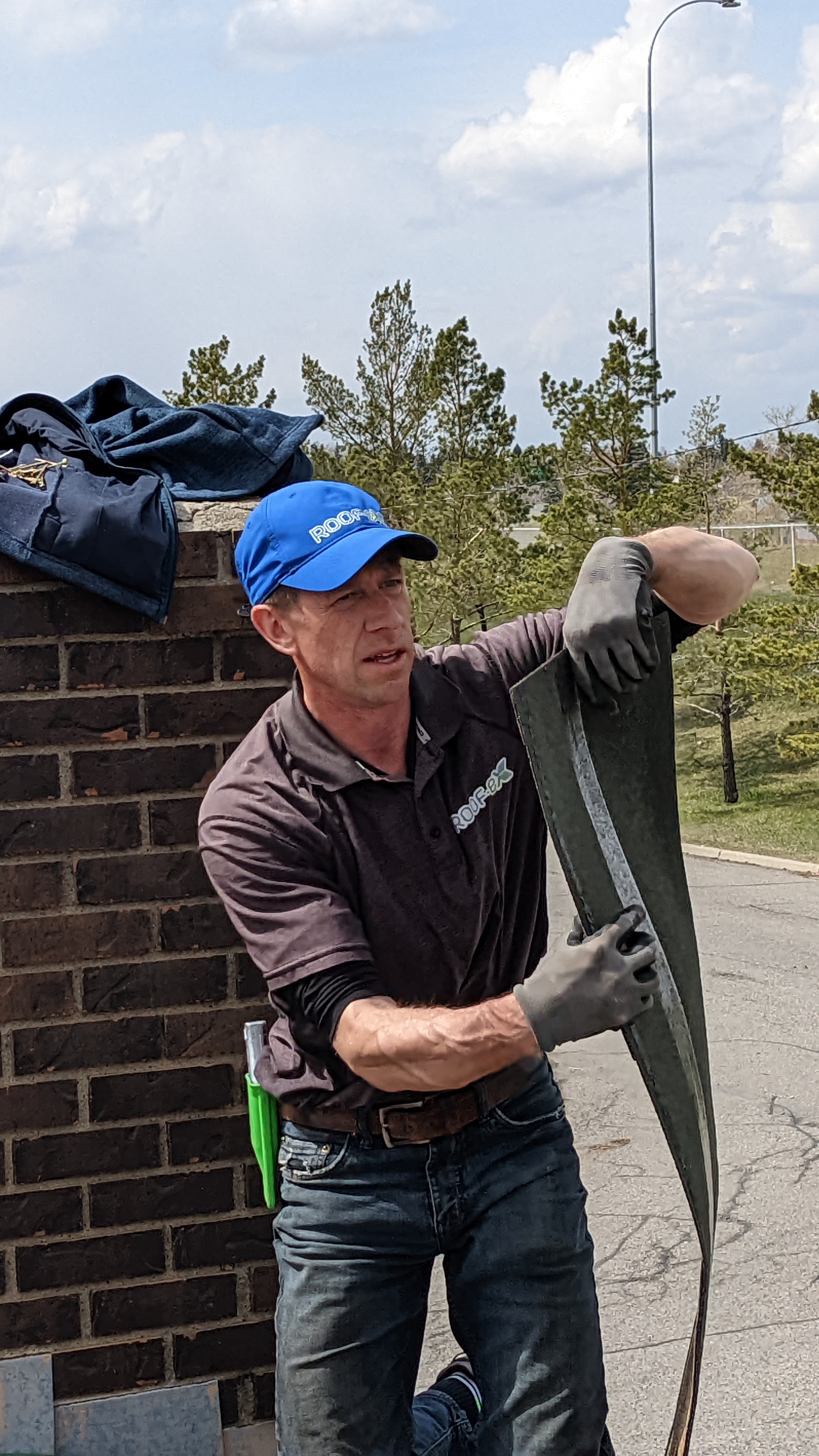
Roof-Ex Owner and Contractor Jules Chabot inspecting roof for damage in Edmonton Roof-Ex Owner and Contractor Jules Chabot inspecting roof for damage in Edmonton
Ask Your Roofing Contractor About Nailing Zones
Your home should be protected no matter what harsh weather conditions occur. It’s crucial to find a roofing contractor that understands the importance of nailing zones and uses high quality shingles that can last. Whether it be Edmonton’s strong winds or Calgary’s sudden hail storms, it doesn’t hurt to invest a bit more in quality roofing and shingle materials to ensure your home is safe for the long run.

We hope this blog has provided you with a better understanding about the causes of damage on a roof and what your roofing company can do to reduce its risk in Alberta’s unpredictable weather.
If you’re a resident in Edmonton, Calgary, or surrounding areas and are interested in learning more about our residential asphalt roofing services, check out our roof replacement and maintenance services.
Do you think your roof is damaged and would like an inspection? Reach out to us here!


Comments